

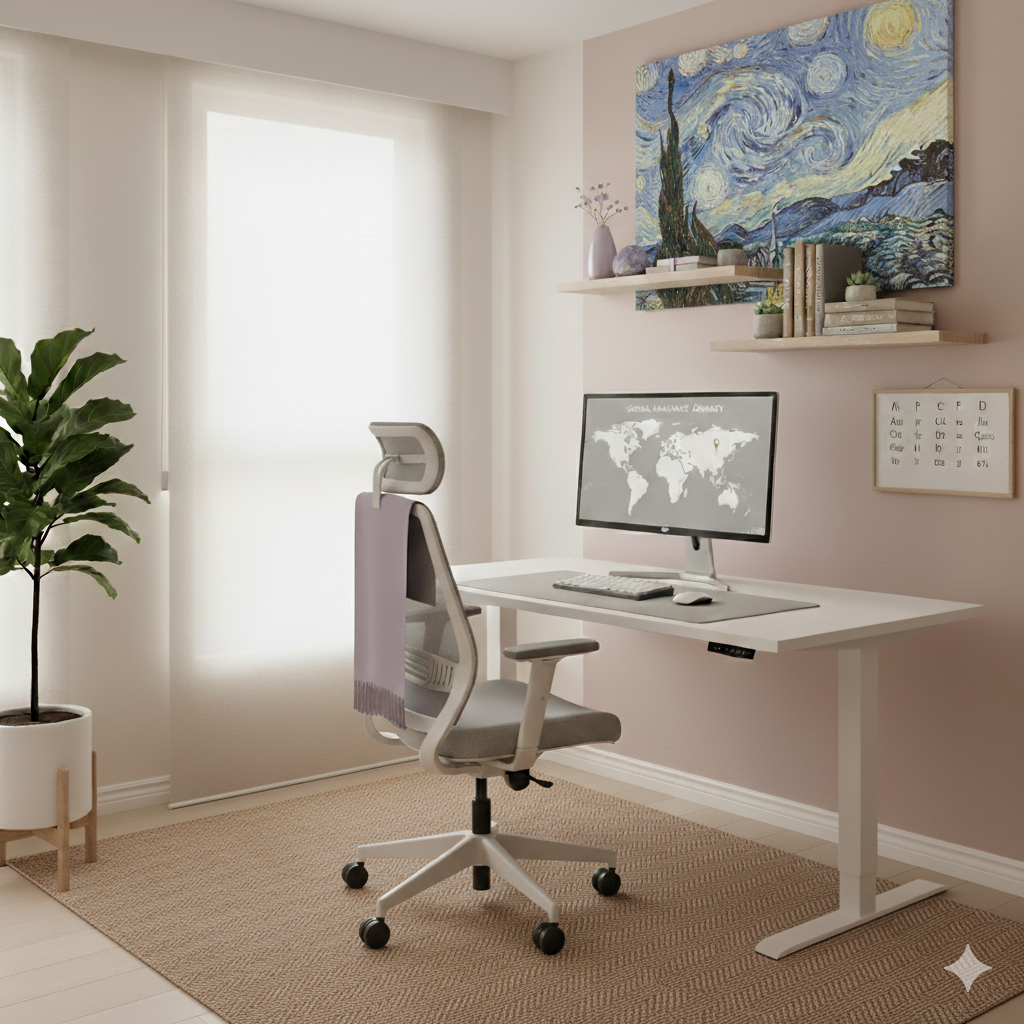
My ideal work from home space
Working from home has its perks—no commute, flexible hours, and the comfort of being close to family. But even in a peaceful household, staying focused isn’t always as easy as it sounds. My teens, for instance, don’t interrupt loudly. They’ll quietly make a hand signal from the door, asking where their papa is, or if they can grab something from the room. It’s minor, really—but it’s enough to break my rhythm mid-lesson.
As an ESL tutor, I spend hours speaking and thinking in full focus mode. Yet I’ve learned that concentration doesn’t come naturally just because you’re home. In fact, home can be full of quiet distractions—the kind that slowly chip away at productivity without you even noticing.
When I first started teaching online, I worked wherever there was space. My thoughts wandered, my back ached, and by the end of each session, I felt more tired than I should have. That’s when I realized focus isn’t just about willpower—it’s about design.
A well-thought-out workspace can change how you feel, think, and work. The way light falls on your desk, how your chair supports your posture, even how clutter-free your surroundings are—it all plays a part in keeping your mind steady. So if you’ve been finding it hard to concentrate, maybe it’s not you. Maybe it’s your space quietly asking for a reset.
Why Focus Is Essential in a WFH Set Up
Unlike office jobs where you can quietly lose focus behind a screen, tutoring demands presence. You’re not just talking; you’re reading faces, catching pronunciation slips, and adjusting your tone to match your student’s level. A small lapse in concentration can mean missing a teaching moment—or confusing a learner who’s trying their best to follow along.
Working from home, though, can test that focus in subtle ways. Maybe it’s the hum of household chores waiting in the background, the movement outside the window, or even your phone lighting up nearby. These small things may seem harmless, but they quietly drain your attention until your energy feels scattered.
The right environment helps you stay present, respond clearly, and keep lessons flowing smoothly. When your space is calm and designed with purpose, your students don’t just hear the lesson—they feel your confidence through the screen. And that connection is what makes online teaching truly work.
Choose the Right Location
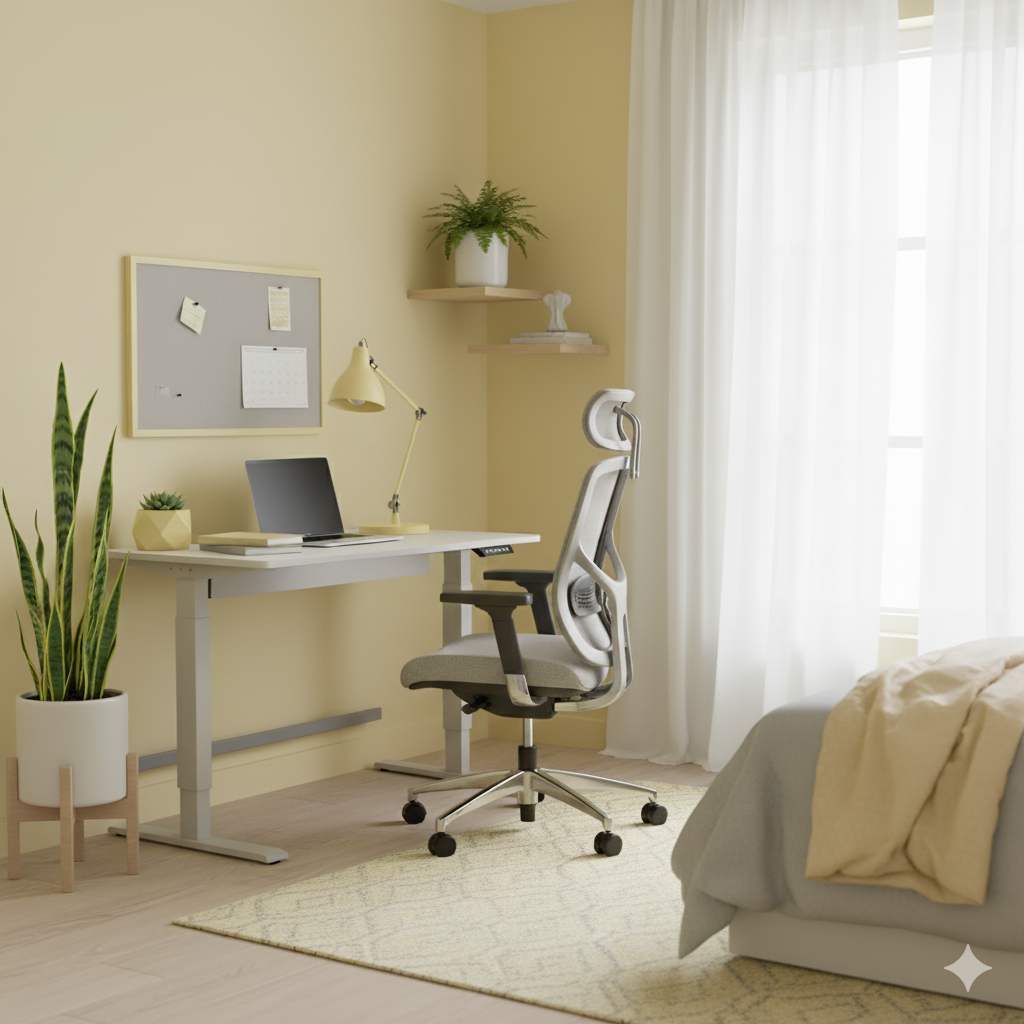
In a perfect world, every work-from-home setup would come with its own quiet little office. But in reality, not everyone has that luxury. I don’t. My desk sits in a corner of our bedroom, sharing space with my books, dresser, and the usual signs of home life. It’s not fancy, but it works because I’ve learned how to make it feel separate from everything else around it.
Location becomes more about boundaries than square footage. I had to train my brain to see that small area as “work mode.” That meant facing away from the bed (because one look at the pillows and my energy would drop instantly) and setting up near the window for natural light.
A simple desk mat, a small rug under the chair, or a folding screen can help mark the area as your workspace. It’s like drawing a soft mental line between your job and your personal life—one that keeps your mind focused during lessons and lets it rest when you’re done.
If your home doesn’t offer many options, don’t worry. The goal isn’t to find a perfect spot; it’s to create one that feels intentional. When that small corner starts to reflect who you are as a teacher—organized, calm, and ready—it becomes enough.
Prioritize Ergonomics and Comfort
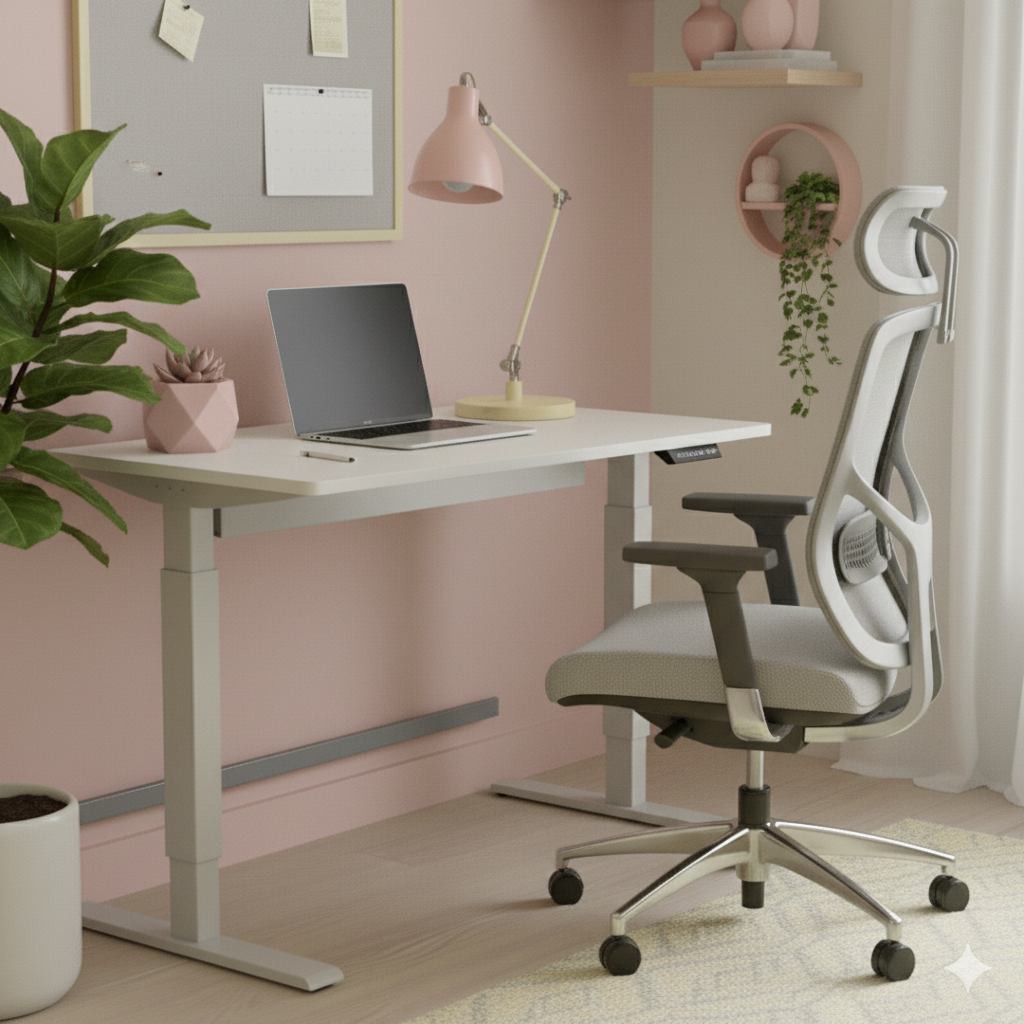
standing desk and ergonomic chair
One randomized trial found that adjusting your workstation (chair height, desk alignment, positioning) significantly reduced neck, shoulder, upper back, and wrist pain among office workers. Pain is a distraction. If your neck or shoulders start complaining mid-work day, your focus will drift.
Chairs without armrests, low monitors, and nonadjustable furniture can lead to strain over time. In other words, many of us who shifted to remote work were already facing ergonomic risks without knowing it.
When your workspace supports your posture and reduces physical stress, you’ll find it easier to stay present with your students. So, in your bedroom corner, here are things that truly help:
Neutral posture is key
Feet flat or supported, thighs parallel to the floor, back lightly rested, elbows close to your body around 90°.
Eye level for screen
Position your monitor (or laptop on a riser) so the top third of the screen is roughly at eye level, and keep it at arm’s length.
Use external tools if necessary
If your laptop setup forces you to strain your neck or wrists, add an external keyboard and mouse. It gives you more flexibility in positioning.
Support your lower back
If your chair doesn’t have lumbar support, use a cushion or rolled towel. Small adjustments go a long way.
Breaks and movement help
Sitting baked into one position is risky—even the best setup won’t save you if you don’t shift now and then. One source suggests short breaks every 30–40 minutes to stretch or walk a few steps.
When you combine small ergonomic upgrades with micro-breaks, your body complains less—and your brain stays clearer. From my own sessions, I’ve noticed that when my chair, screen, and posture feel “right,” I don’t get that creeping fatigue or scattered mind so early into a class.
Declutter for Clarity
I’ve always liked things in order. My students sometimes laugh when they notice how neatly my desk looks on camera. Truth is, I can’t think straight when there’s too much going on around me. Even a misplaced pen or a half-folded notebook can throw me off more than I’d like to admit.
A study by Princeton University Neuroscience Institute found that visual clutter competes for attention in the brain, making it harder to focus and process information. When the environment feels chaotic, your mind mirrors it.
Another report from the Royal Australian College of General Practitioners notes that clutter increases cognitive load — your brain spends energy filtering unnecessary details instead of staying on task.
I always start my day with a quick scan of my workspace. A clean surface helps me reset mentally, especially before back-to-back lessons. The fewer things my eyes land on, the easier it is to stay present with my students. It’s not about perfection — it’s about peace.
Decluttering isn’t just about removing mess; it’s about clearing mental pathways. A quiet desk equals a quiet mind, and for someone who teaches for hours, that calm makes all the difference.
Infuse Personality Without Distraction
I like keeping my space clean, but that doesn’t mean it has to feel bland. Every so often, I add something that makes me smile — a little piece of whatever I’m into at the moment. There was a time when my desk had Kuromi stickers tucked near my monitor. Lately, it’s a small Crayon Shin-chan figurine sitting beside my pen holder, looking just mischievous enough to lighten the mood before class. 😂😂
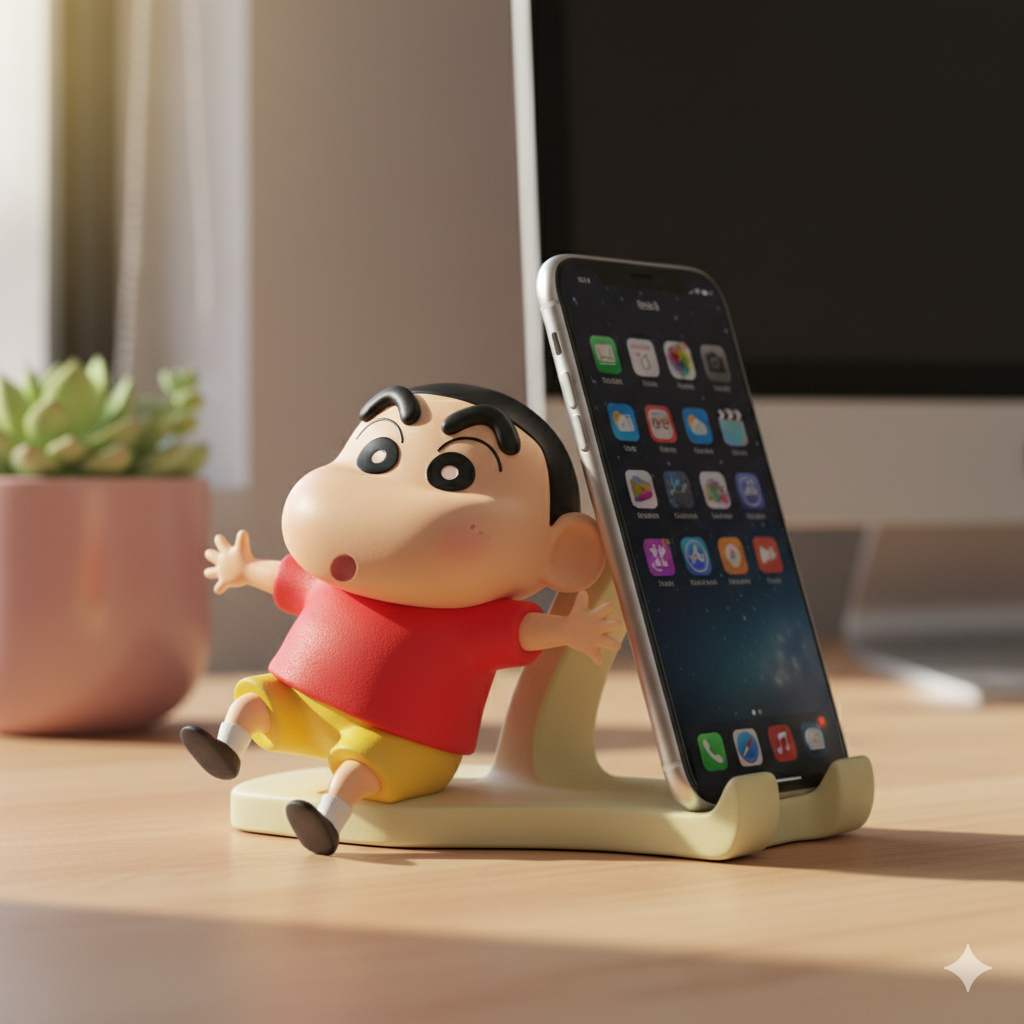
Crayon Shin-chan cellphone holder
Those small touches remind me that even though my workspace is inside our bedroom, it’s still my corner. A space should reflect who you are, not just what you do. The trick is finding that balance — personal enough to inspire you, but not busy enough to distract.
A study from the University of Exeter found that people who personalize their workspace tend to feel happier, more comfortable, and more productive. When you like the space you’re in, your brain associates it with positive energy, which naturally boosts focus.
Optimize Lighting and Acoustics
Teaching ESL online made me realize how much lighting and sound affect focus. Good lighting helps students see your expressions clearly — especially when you’re teaching pronunciation or tone. Since I work from our bedroom, I make the most of natural light and switch to a soft white lamp when it’s dim. Research shows that balanced lighting reduces eye strain and boosts alertness, which explains why I feel more focused when my space is bright but gentle on the eyes.
As for sound, I’ve accepted that total silence isn’t realistic — not when there are roosters, barking dogs, and a busy household outside my door. When that happens, I usually just smile and apologize early on. Most students understand; it’s part of the charm of teaching from home. To keep things manageable, I’ve added small fixes like a rug, thick curtains, and even a towel under my laptop to absorb noise. My family also knows our quiet-time signals — subtle gestures that mean, “Class is on.”
A few mindful choices with light and sound can make a big difference. The goal isn’t perfection — just a setup that helps you stay present, focused, and comfortable while doing your best work.
Final Thoughts
Working from home isn’t just about where you sit — it’s about creating a space that supports who you are and how you work best. Even small changes can shift your energy and mindset in ways that last beyond the workday. So, if you were to look around your space right now, what’s one thing you could change to make it feel a little more you — and a little more focused?
 From My Corner of the Couch