


I love using idioms! I remember a student once asked, “Teacher, what does break the ice mean? Are we talking about ice cubes here?” I laughed, then paused—how do you explain something that doesn’t mean what it says? Expressions like this pop up everywhere—in casual chats, movies, and even work emails. But for many ESL students, idioms can feel like a secret club where everyone knows the password… except them.
As someone who’s been teaching Japanese students English for almost 2 years now, I’ve seen firsthand how tricky idioms can be. Some students try to translate word for word and get completely lost. Others memorize lists but freeze when it’s time to use them.
This blog post is a friendly guide to help you understand and actually use 15 common idioms in everyday English. Nothing fancy or overwhelming—just useful phrases, simple explanations, and relatable examples to help you and your students sound more natural and confident when you speak.
Why Learning Idioms Matters
Idioms help you sound more natural when you speak English. Native speakers use them all the time. Learning them doesn’t just improve your vocabulary. It also helps you understand jokes, expressions, and common sayings in daily life. It’s a small step that makes a big difference in how confident and fluent your student sound.
15 Everyday English Idioms and Their Meanings
1. Break the ice

Meaning:
To start a conversation in a way that makes people feel more comfortable, especially when meeting for the first time.
Example:
“I was nervous on my first day, but my co-worker broke the ice by joking about how confusing the coffee machine was.”
When to use it:
Perfect for first meetings, new classes, or awkward silence situations. It’s that little moment when someone makes others relax—like offering a smile or cracking a light joke.
Quick tip:
This idiom isn’t about cold weather or actual ice. Think of it as breaking that invisible wall of awkwardness when people don’t know each other yet.
2. Piece of cake
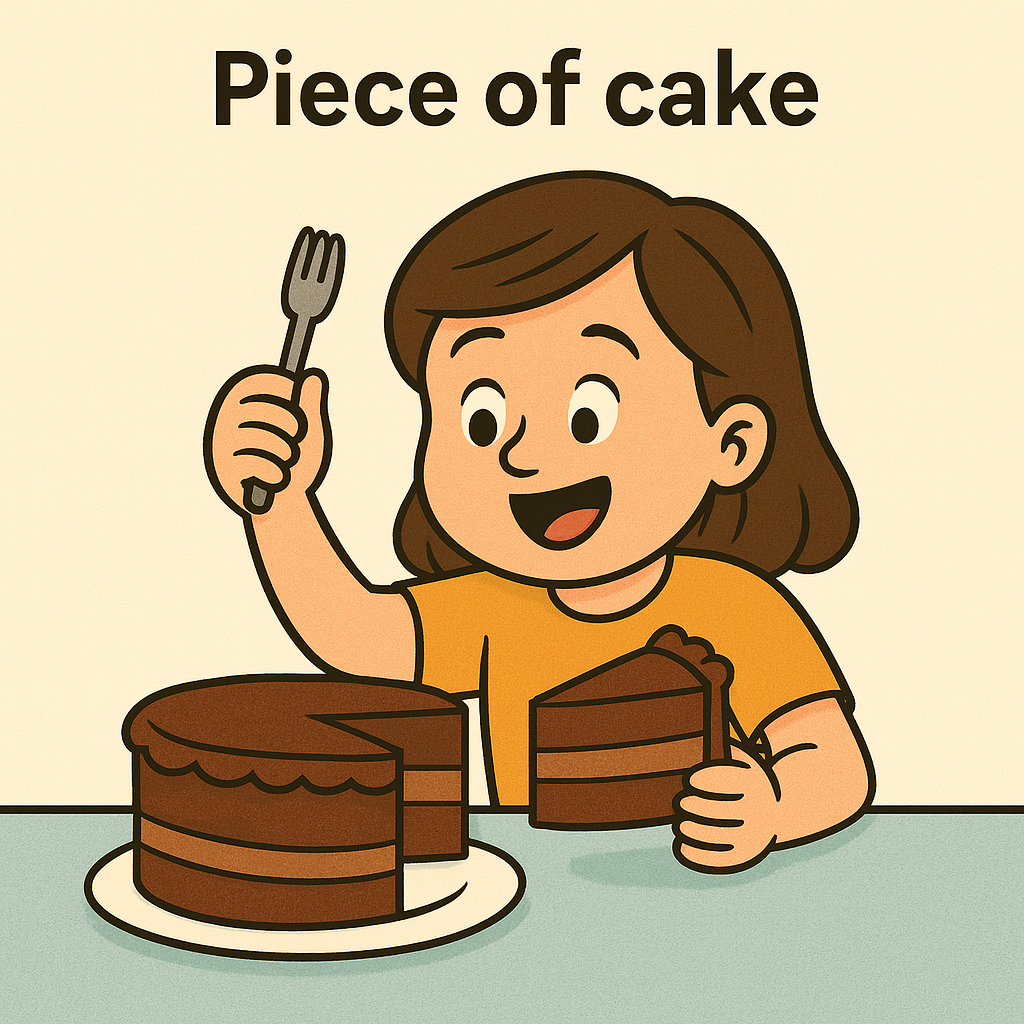
Meaning:
Something that’s very easy to do.
Example:
“Don’t worry about the grammar quiz—it’s a piece of cake if you’ve done the practice sheets.”
When to use it:
Use this when something turns out simpler than expected. Whether it’s cooking dinner, solving a problem, or finishing a task at work—it fits whenever the job feels like no big deal.
Quick tip:
It’s funny how cake ended up meaning “easy,” right? But just imagine someone handing you a slice of cake—effortless, sweet, and something you wouldn’t complain about.
3. Spill the beans

Meaning:
To reveal a secret or share information that was meant to be kept private.
Example:
“She spilled the beans about the surprise party, so now it’s not a surprise anymore!”
When to use it:
Great for those moments when someone accidentally (or excitedly) tells something they weren’t supposed to. It’s often playful, not serious.
Quick tip:
No actual beans involved—just picture someone tipping over a can of beans and everything coming out. That’s kind of what it feels like when a secret slips out unexpectedly.
4. Hit the books

Meaning:
To start studying seriously.
Example:
“I can’t hang out tonight. I’ve got to hit the books for tomorrow’s test.”
When to use it:
Perfect when you or someone else is diving into study time. It’s about putting in real effort to learn.
Quick tip:
No need to actually smack your textbooks! Just imagine switching off distractions and focusing hard. That’s what this idiom is all about.
5. Let the cat out of the bag

Meaning:
To accidentally reveal a secret or surprise.
Example:
“Jake let the cat out of the bag about the birthday trip before we even booked the flights!”
When to use it:
Use this when someone says something they weren’t supposed to—like spoiling a surprise party or revealing a plan too early. It’s often lighthearted, but oops-worthy.
Quick tip:
This idiom just means the secret’s out. Whether it slipped out by accident or someone just couldn’t hold it in, the surprise is officially ruined.
6. Under the weather
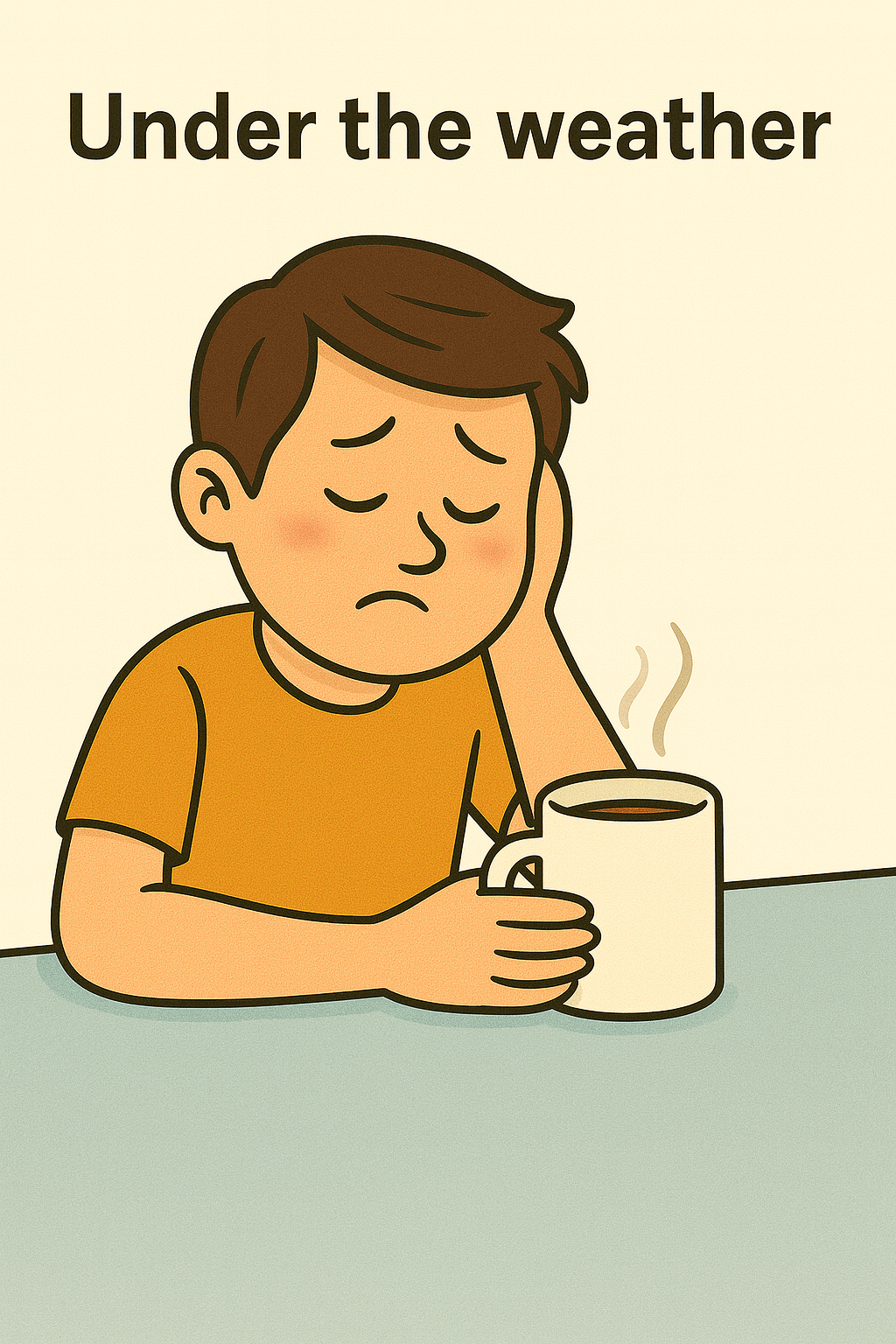
Meaning:
To feel sick or not quite yourself.
Example:
“She looked a bit under the weather, so she went home early to rest.”
When to use it:
Great for those days when you’re feeling off—whether it’s a cold, a headache, or just low energy. It’s a gentler way to say you’re not feeling well.
Quick tip:
It’s just a casual way to say you’re not 100%—without sounding too serious or dramatic.
7. Cost an arm and a leg
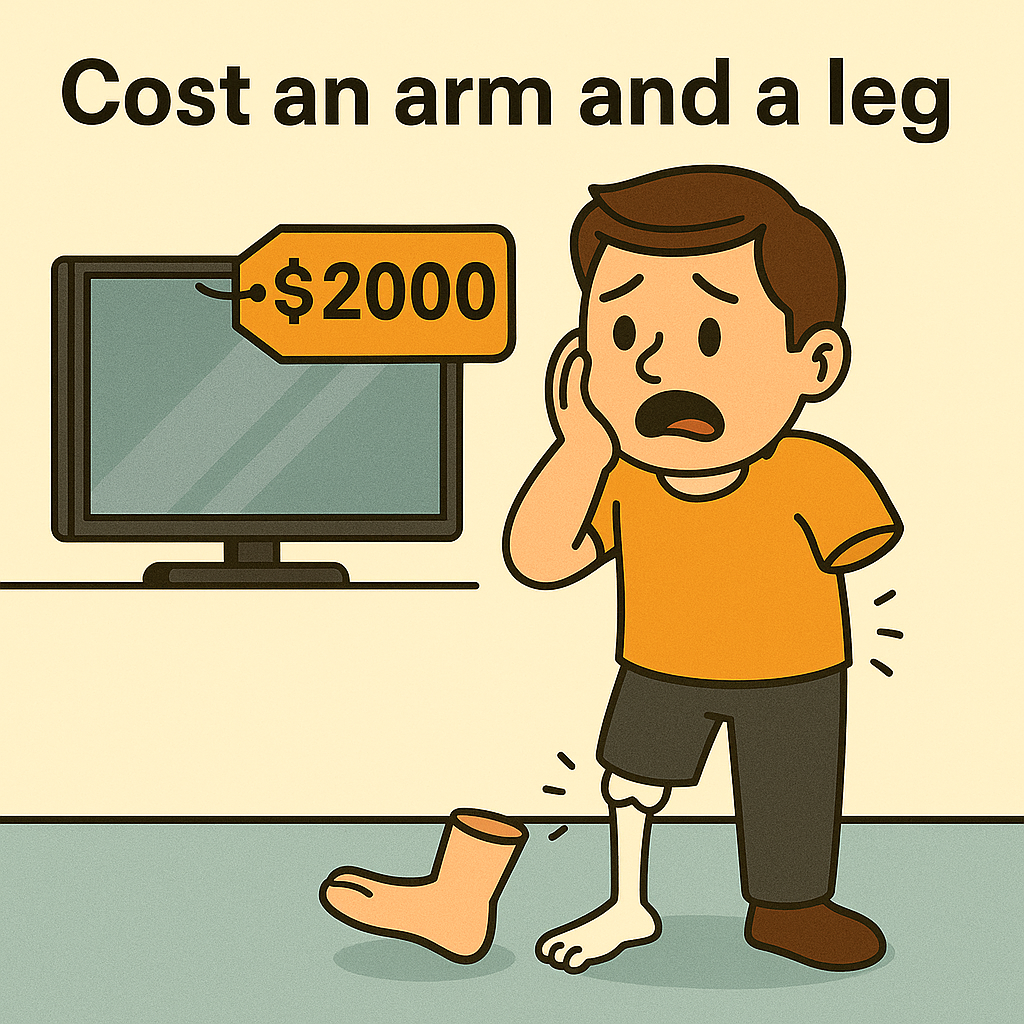
Meaning:
To be very expensive.
Example:
“That designer bag costs an arm and a leg. I’d rather buy groceries for a month!”
When to use it:
Use this when you’re talking about something that feels way too pricey—like high-end gadgets, travel tickets, or anything that makes your wallet cry a little.
Quick tip:
No need to imagine losing limbs here—it’s just a colorful way to say something costs more than it probably should.
8. The ball is in your court
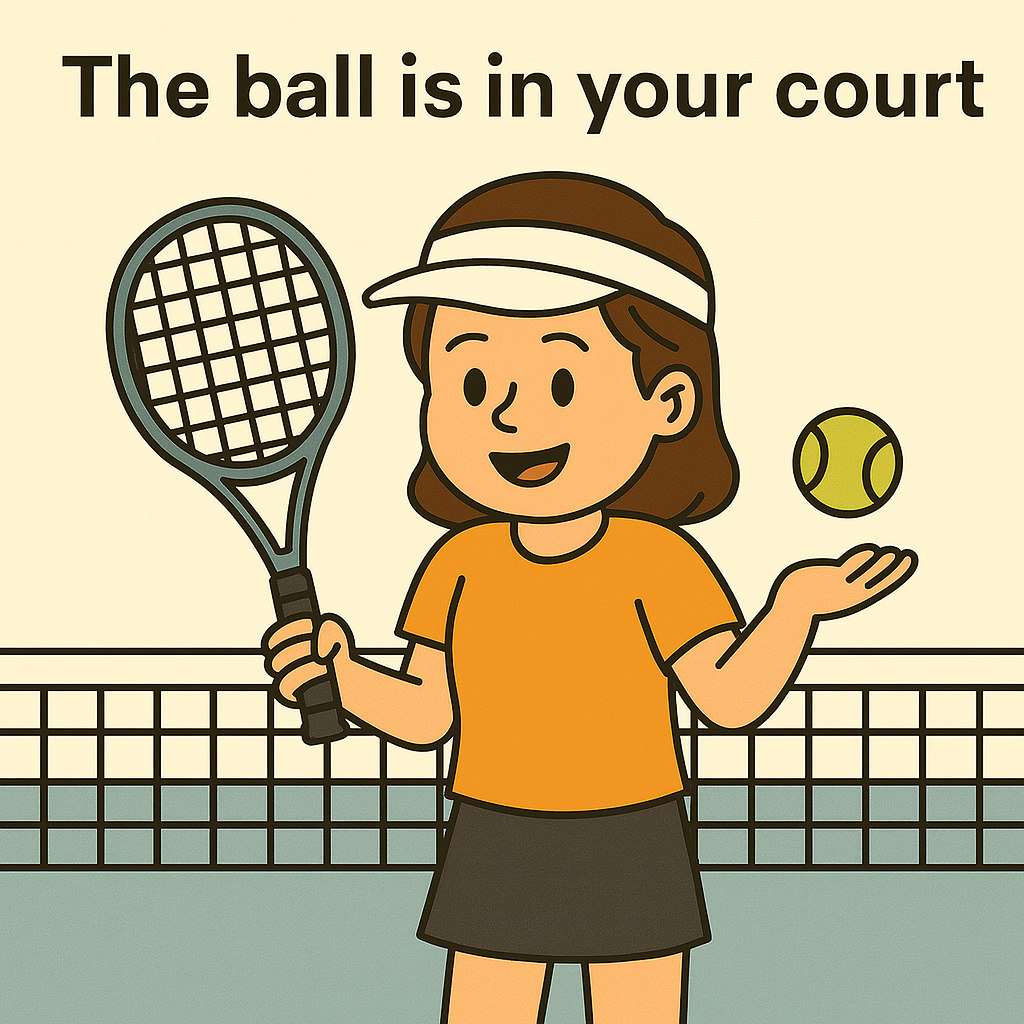
Meaning:
It’s your turn to take action or make a decision.
Example:
“I’ve done everything I can to fix things. Now the ball’s in your court.”
When to use it:
This idiom works well when someone needs to respond, make the next move, or decide what happens next—like in a conversation, relationship, or even a group project.
Quick tip:
Think of a tennis match. Once you’ve hit the ball, it’s the other person’s turn. Same idea here—you’re waiting for them to act.
9. Bite the bullet

Meaning:
To do something difficult or unpleasant that you’ve been avoiding.
Example:
“I didn’t want to go to the dentist, but I finally bit the bullet and booked the appointment.”
When to use it:
Use this when it’s time to stop putting something off and just face it—like paying a big bill, giving tough feedback, or making a hard decision.
Quick tip:
It’s not about biting anything painful. It simply means gathering courage and getting something over with—even if you’re dreading it.
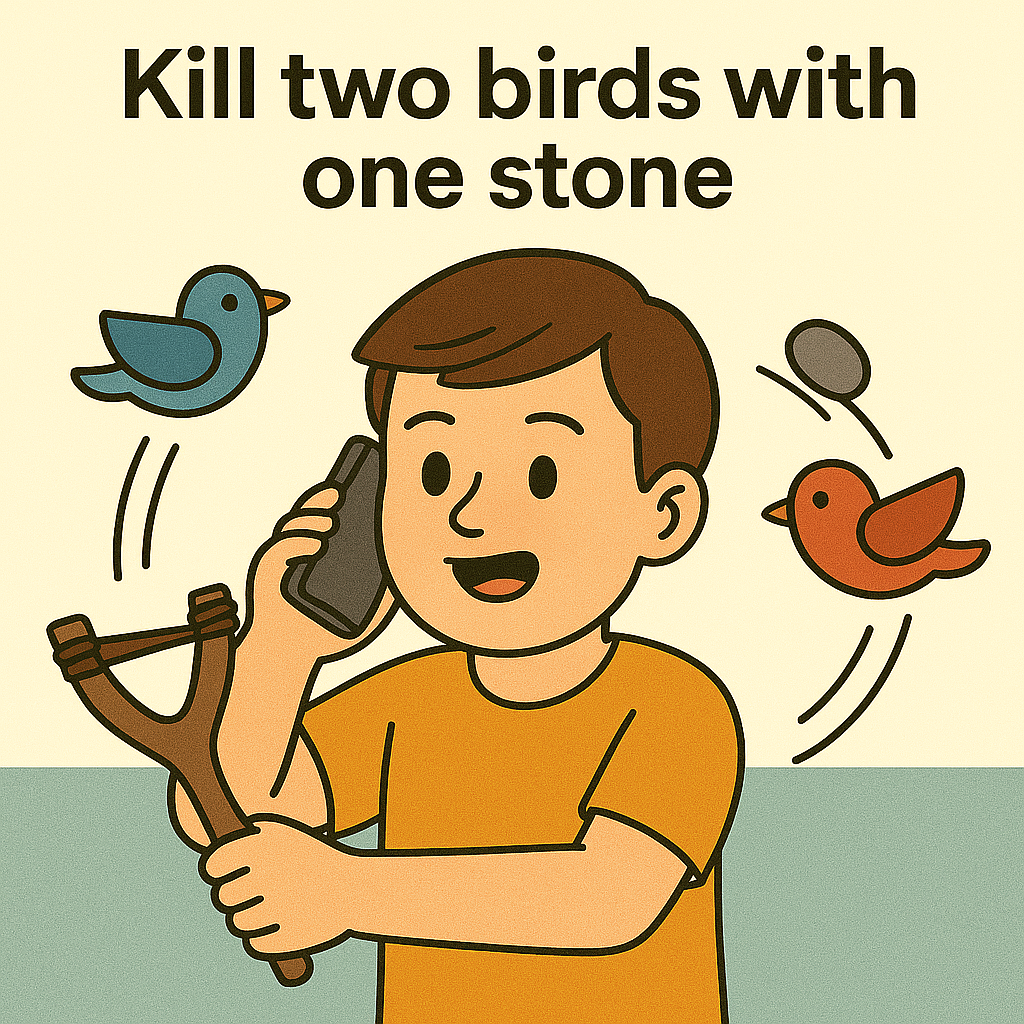
10. Kill two birds with one stone
Meaning:
To accomplish two things at the same time with a single action.
Example:
“I listened to an English podcast while cleaning the house—I definitely killed two birds with one stone.”
When to use it:
Perfect for those efficient moments when you check off two tasks at once. Think learning and doing chores, walking and making calls, or cooking while reviewing lesson plans.
Quick tip:
The image sounds harsh, but the idea is harmless: getting more done with less effort. It’s all about working smarter, not harder.
11. Once in a blue moon

Meaning:
Something that happens very rarely.
Example:
“He only shows up to class once in a blue moon—usually right before an exam.”
When to use it:
Use this when talking about events that almost never happen—like a super lazy coworker volunteering, or your super-strict teacher cracking a joke.
Quick tip:
Blue moons are real, but they’re rare—just like the moments this idiom describes. Think of it as a light way to say, “Don’t count on it happening often.”
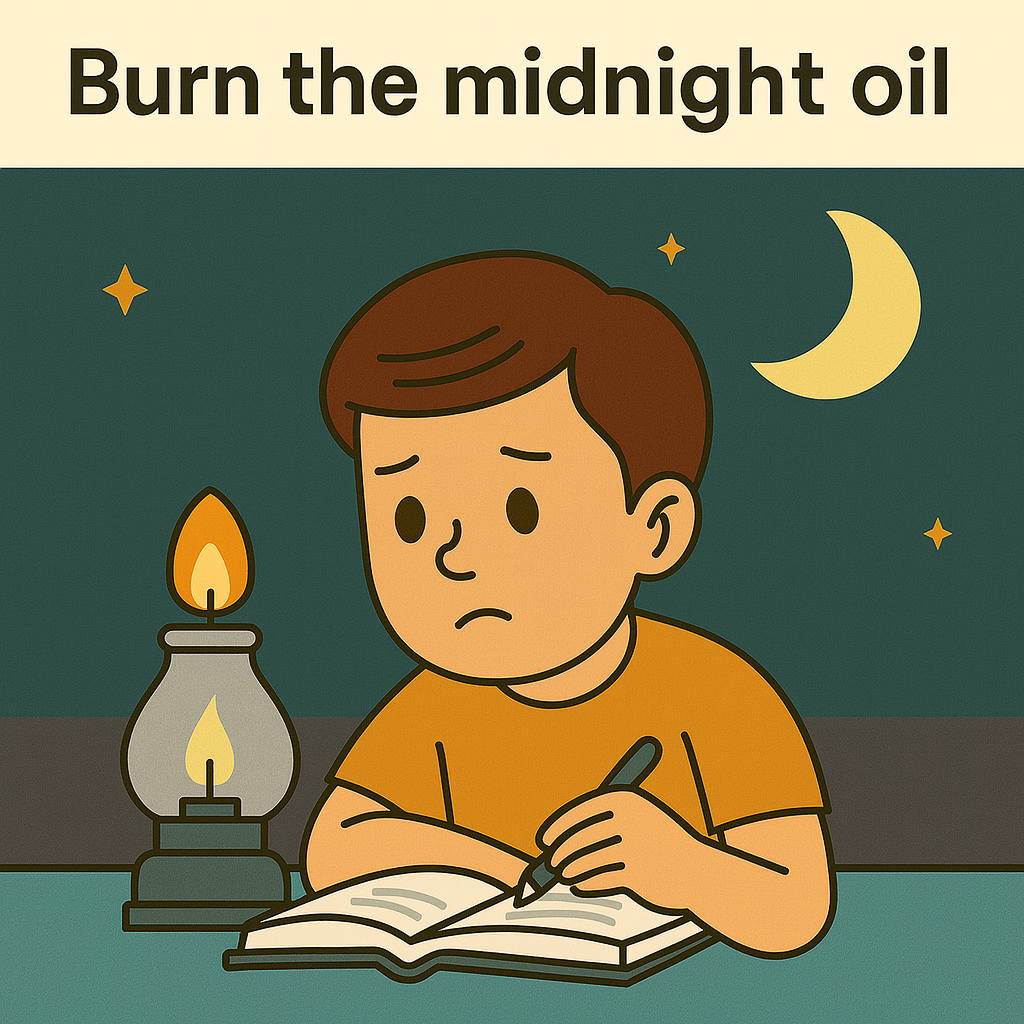
12. Burn the midnight oil
Meaning:
To stay up late working or studying.
Example:
“She burned the midnight oil finishing her essay the night before the deadline.”
When to use it:
Use this when someone’s pulling a late-nighter to get things done—whether it’s for work, school, or even side hustles.
Quick tip:
It goes back to when people used oil lamps to work at night. These days, it’s more about laptops, coffee, and trying to stay awake past midnight.
13. Hit the nail on the head

Meaning:
To say or do something that’s exactly right or accurate.
Example:
“When she said we’re all tired because we don’t set boundaries, she really hit the nail on the head.”
When to use it:
Perfect for those moments when someone totally nails the point—like explaining a problem, giving advice, or summing up how everyone feels.
Quick tip:
Picture hammering a nail—you need to hit it just right. That’s the same idea here: saying exactly what needs to be said.
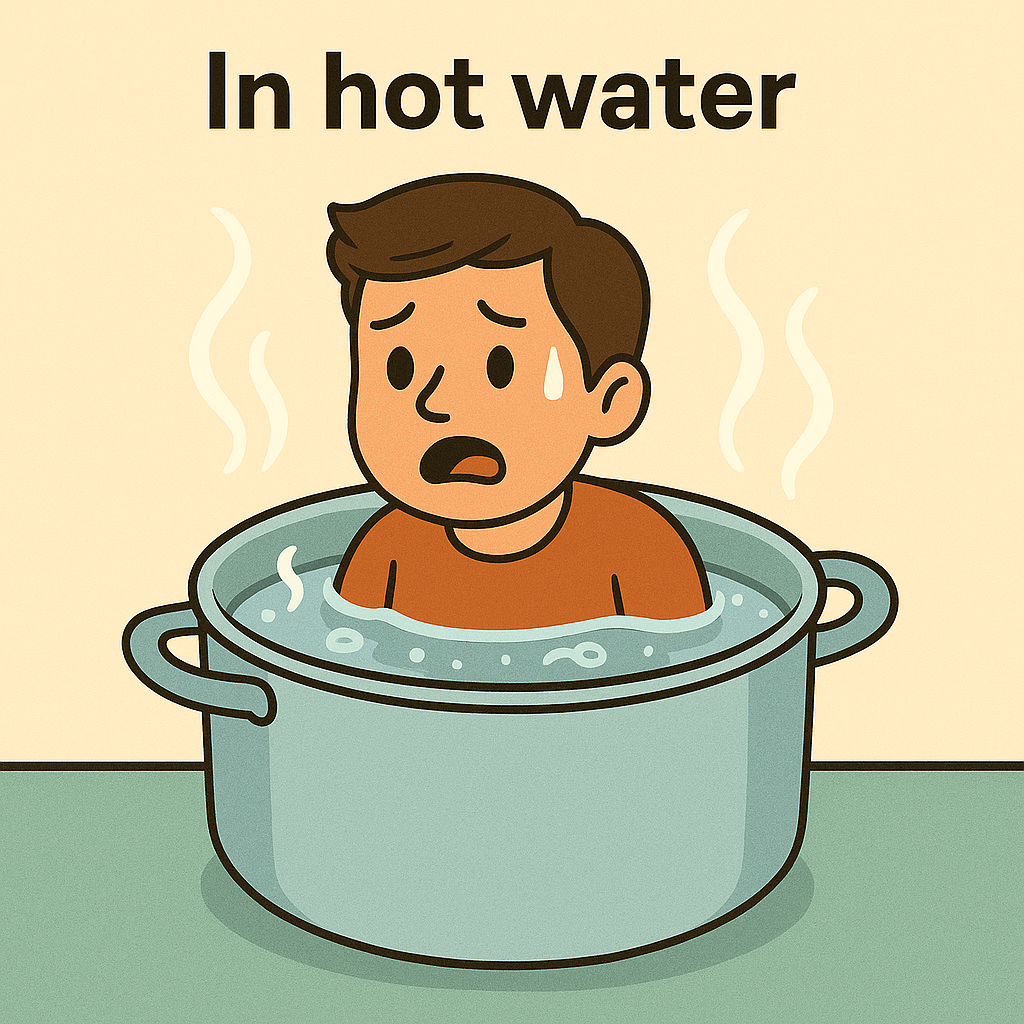
14. In hot water
Meaning:
To be in trouble or facing consequences for something you did.
Example:
“He forgot to submit the report on time and ended up in hot water with his boss.”
When to use it:
Use this when someone’s actions lead to problems—like breaking rules, missing deadlines, or upsetting someone important.
Quick tip:
Think of hot water as an uncomfortable situation. You don’t want to be in it, and if you are, you’ll want to get out fast!
15. It’s not my cup of tea

Meaning:
It’s something you don’t particularly like or enjoy.
Example:
“Reality shows aren’t my cup of tea—I’d rather watch documentaries.”
When to use it:
Use this when you want to express a personal preference without being rude. It’s a gentle way to say, “Thanks, but no thanks.”
Quick tip:
You don’t need to love every trend, food, or hobby. This idiom lets you bow out gracefully and keep things chill.
Final Thoughts
Language comes alive in the little things—like how we express humor, frustration, or surprise. Idioms are part of that color, and knowing them brings you closer to sounding like a natural speaker, not just someone who studied the rules.
So, which of these idioms have you heard before—or maybe even used without realizing? Drop your favorite in the comments or try one out in your next conversation. You might surprise yourself with how natural it feels.
 From My Corner of the Couch