
Working from home sounds like a dream until your body starts reminding you that you’ve barely moved all day. One minute you’re sipping coffee in your pajamas, and the next thing you know, your back feels like it’s been through a spin cycle, your legs have gone numb and a bit swollen, and you can’t remember the last time you blinked.
As a work-from-home mom juggling two jobs—five hours of ESL tutoring with Rare Job and eight hours of content writing for NoBS Marketplace—I know this all too well. Most of my day is spent switching between Zoom calls and Google Docs, usually with a steaming cup of black coffee by my side and a stubborn pain in my neck that refuses to quit.
There were days I’d stand up after hours of sitting, and my knees would creak like an old wooden floor. That’s when I realized: just because I’m at home doesn’t mean I should forget about my health. In fact, it’s easier than ever to fall into bad habits when your “commute” is ten steps to the dining table.
This post will discuss small changes that can fit into your already-full schedule. No judgment, no fluff. Just simple tips that have helped me stay (mostly) sane, flexible, and a little bit healthier without leaving the house.
Let’s walk through them—figuratively, for now. We’ll stand up soon. Promise.
Rethink Your Workspace
Creating a healthier workspace doesn’t mean spending a fortune or transforming your home into a Pinterest board (though I would love that). It’s about working smarter with what you already have.
Start with your chair. If you’re using a dining chair with zero back support, try rolling up a small towel and placing it behind your lower back. Instant lumbar support. Your spine will thank you. If you can get a proper office chair with adjustable height and a backrest, that would be even better. I thank my husband all the time for buying me a nice office chair 💙💙💙
Next, let’s talk desk height. Ideally, your elbows should be at a 90-degree angle when typing. If your table is too high, try adding a seat cushion to lift yourself up. If it’s too low, stack a few sturdy books under your laptop or monitor to bring it closer to eye level. Looking down all day can strain your neck. Hello, tension headaches.
Foot support is another simple fix that gets overlooked. If your feet are dangling like a kid on a barstool, grab a box or footrest to keep your knees level with your hips. I actually bought this adjustable angle footrest with protrusion points and massage rollers from Shopee for only ₱140, and I swear it’s one of my best WFH finds. It keeps my legs relaxed, helps with blood flow, and even feels like a mini foot massage while I work.

Footrest from Shopee for only P140
Another underrated upgrade? An ergonomic mouse. I used to get sharp pain on my wrist after long writing hours, especially when switching between lessons and content work. Since switching to an ergonomic mouse, the pressure has eased up, and the strain is now barely noticeable. It’s a small change with a big impact, especially if you’re on the computer most of the time.
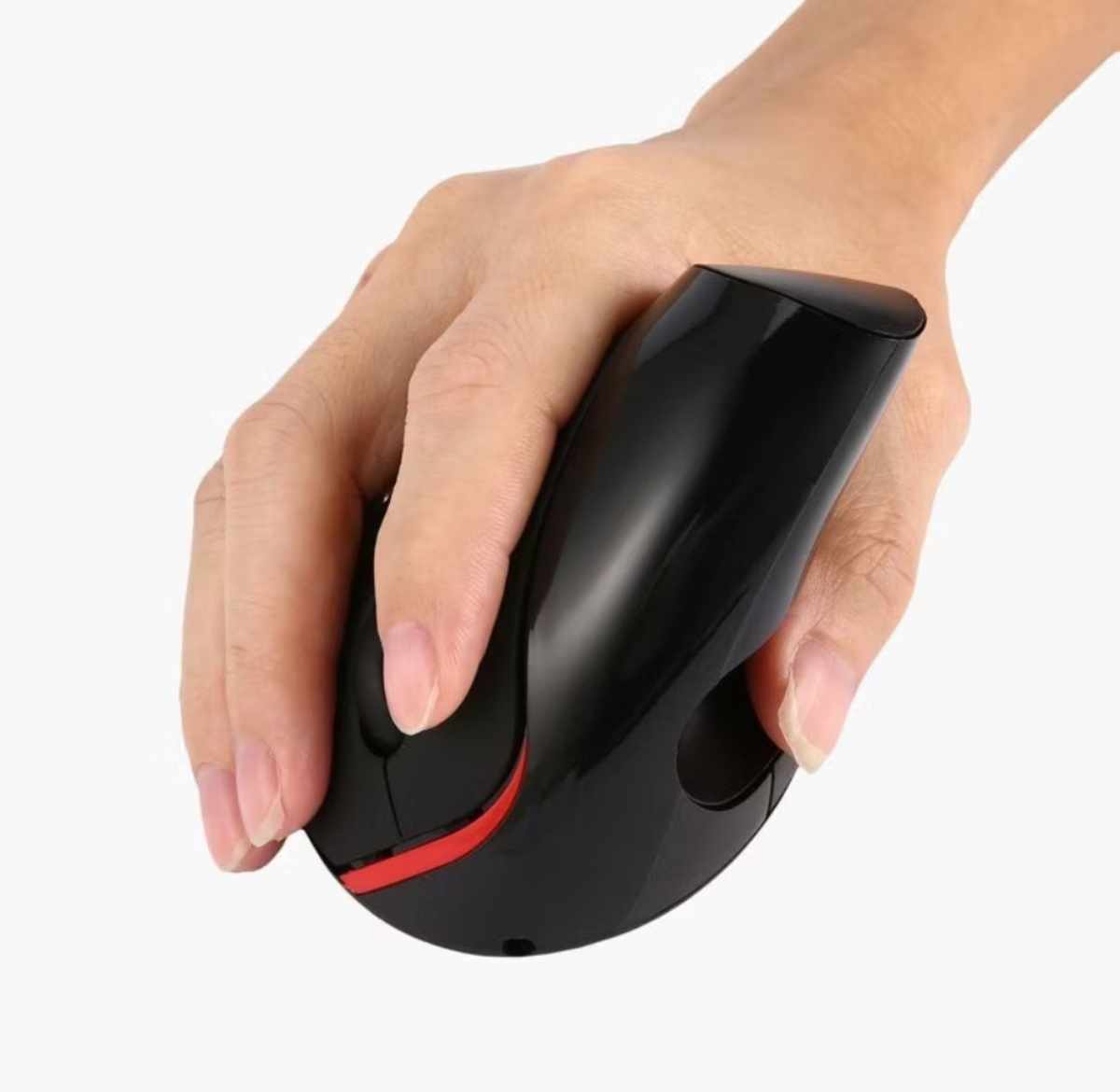
Wired ergonomic mouse from Shopee for P179, wireless is P224
Now, here’s a tip I swear by: switch things up during the day. I rotate between sitting at my desk, standing at the kitchen counter (makeshift standing desk!), and working for 30 minutes on the bed with three pillows propped on my back so I could stretch my legs. That little change in position gives my lower back and hips a break from the chair.
Lastly, make sure your workspace gets decent light—natural is best, but if that’s not an option, a good bulb can make all the difference. I recently switched to LED light that gives off just the right brightness and is cost-efficient, too. Way better than the headache-inducing yellow glare I used to deal with.
You don’t need to build a full-blown home office to be comfortable and healthy. Just a few small tweaks can keep you from ending each day feeling like you got body-slammed by your own chair.
Move More, Sit Less
When you work from home, it’s easy to forget to move. You’re in the zone, finishing tasks back-to-back, and before you know it, you’ve been glued to the chair for hours. But staying in one position all day, especially for people like me with hemiplegia, can cause severe discomfort. Our bodies need movement, even in the smallest ways.
I’ve learned to listen to mine.
One simple habit that helps? Hourly movement reminders. I set an alarm on my phone that gently nudges me every hour. Not to go jog around the block—but to stretch, breathe, and shift positions. I stretch the side I can move more freely, which is my right, rotate my shoulders, or lean forward to loosen my back. Even just standing up and changing positions makes a difference.
Because I have limited mobility, I focus on what I can do—and I build movement around that. After a class or a writing sprint, I take a break to reposition, stretch my arms, or walk around the room if my legs allow it that day. And when standing isn’t possible, I do light seated movements: ankle rolls, shoulder shrugs, side bends. No pressure, just gentle ways to keep blood flowing and stiffness away.
YouTube has some great short videos for seated stretching or low-impact desk exercises. I pick routines I can safely follow—just a few minutes here and there. No fancy gear, no stress.
And here’s a little mental trick: I pair movement with everyday tasks. When I finish a class, I stretch. When I hit “submit” on an article, I reach for my water bottle and roll my shoulders. It turns moving into a routine, not a chore.
The goal is to keep your body comfortable, even with limits. And when you work long hours like we do, those small intentional movements matter more than ever.
Schedule Regular Workouts
Let’s be real—when you’re working full-time from home and dealing with house chores, squeezing in an official “workout” can feel like a luxury. Add hemiplegia into the mix, and well… traditional exercise routines don’t always make the cut.
For me, my daily exercise is housework. Sweeping the floor, mopping, wiping down surfaces, and scrubbing the bathroom may not look like a workout on paper, but they get my body moving, make me sweat, and leave the house cleaner. Win-win.
But if you’re able to do more, that’s great too. A brisk walk around the neighborhood, light jogging, or even a gym session can be incredibly energizing. Some people thrive on structured routines—30 minutes of cardio, a quick strength session, or a guided online workout. The key is to choose something that works for your body and your schedule.
If you’re starting from zero, don’t pressure yourself. Even two to three days a week of light movement can make a difference. You could try:
- Seated yoga or stretching routines
- Short resistance band workouts
- Dance breaks during lunch (yes, even a one-song solo counts!)
And don’t forget to listen to your body. Some days, you might feel like moving more. Other days, doing the dishes might be your limit—and that’s perfectly okay.
Eat Mindfully
I’ll be the first to admit it—I’m a junk food freak. Chips, cookies, instant noodles… they call to me, especially when I’m stressed. But over time, I’ve learned to set limits. Not eliminate (I mean, come on—we still need joy), just cut back enough so I don’t feel sluggish halfway through the day.
What really helps is that I’m lucky—my Nanay does most of the cooking at home. She prepares delicious, home-cooked meals that actually make it easier to avoid ordering out or reaching for junk. And I’m super grateful for that. Her meals feel like comfort and nutrition wrapped in one, and they save me so much time during the week.
On weekends though, I take over the kitchen—with a little help from my teens. Sometimes they chop veggies, stir the pot, or just hang around and “taste test” (a.k.a. sneak bites). It’s our casual way of bonding, and I get to squeeze in some extra movement too.
Even with good food on the table, it’s easy to overeat when you’re working from home. The fridge is always within reach, and boredom snacking becomes a habit. What’s helped me is keeping a set meal schedule—breakfast (black coffee for me, since I do intermittent fasting), a proper brunch, and a light dinner. I try not to snack too much in between, and when I do, I go for Skyflakes—unless it’s that kind of day, and I reach for a pack of chichirya. Balance, right?
Another small thing? Drinking more water. I keep a big water bottle beside me and make it a rule to drink whenever I finish a class or a writing block. It curbs hunger, boosts energy, and keeps my skin from looking like I’ve been surviving on coffee and stress (which… sometimes I have).
Give Your Eyes a Break
Staring at a screen for hours isn’t just tiring—it’s a recipe for dry eyes, headaches, and that weird, foggy feeling you get when you finally look away and realize it’s already dark outside. Been there too many times.
As a content writer and ESL tutor, I spend most of my day in front of a screen, hopping from Zoom lessons to Google Docs to Slack messages. After a while, it feels like my eyes are begging for a break. That’s where a few small habits have made a huge difference.
First off, the 20-20-20 rule is a game-changer: every 20 minutes, look at something 20 feet away for at least 20 seconds. I usually stare out the window or look at the ceiling and examine the dirt I need to tackle over the weekend. Lol. It’s a tiny habit that works, especially when juggling back-to-back work blocks.
Now here’s something I swear by: Rohto eyedrops with a cooling effect. They’re not just refreshing—they’re seriously effective. One of my Japanese students, who works as a pharmacist for an eye medicine company, even told me they’re legit and clinically sound. That made me feel even better about using them regularly. I buy them on Shopee for just ₱135 a piece, and they’ve helped me keep my eyes from drying out like raisins after a long day. Disclaimer: The first time I used it, it felt strange—there was a mild sting and a bit of discomfort, but that went away quickly after a few uses.

Rohto eyedrops from Shopee P135
Another trick? Adjust screen brightness and use blue light filters—either through your device settings or with a physical screen protector. I used to get headaches from the glare alone, but now that I’ve dimmed my screen a bit and switched to a warm-toned filter in the evening, my eyes feel way less strained.
If you wear glasses, it’s also worth asking your optometrist about blue light lenses. They might not work for everyone, but they’ve helped some people reduce fatigue. I haven’t personally tried them yet because they’re too expensive, but I’ve heard good things.
Lastly, blink more often. It sounds silly, I know, but when we focus, we forget to blink, and that dries out our eyes fast. I try to consciously blink during lessons or while editing long pieces. And on some days, I watch sappy TikTok reels just to cry. 😹😹😹
Small habits, big relief. Your eyes do a lot for you—treat them kindly.
Set Boundaries Between Work and Life
When your home becomes your office, the line between “work time” and “rest time” gets blurry fast, especially when you’re like me and work in the bedroom. It’s convenient, sure, but it also makes it hard to switch off. The same place where I take classes, write articles, and check emails is also where I’m supposed to relax and sleep. Not the easiest combo.
That’s why boundaries are essential, even if you don’t have a separate home office.
For starters, I make it a point to shut everything down at a certain hour. Once I’ve wrapped up my last class or submitted the final article for the day, I close the laptop, clear the desk, and try not to look back. No peeking at Slack. No quick edits “just because.” Done is done.
I also have this little habit of changing the setup just enough to tell my brain, “Hey, work is over.” I move my chair aside, dim the lights, or pull the curtains—tiny shifts that help my mind separate the two worlds, even though they happen in the same space.
During meals or family time, I try not to multitask. It’s tempting to keep my phone close in case something urgent pops up, but I’ve learned that 99% of things can wait. That one hour to eat, chat, or just sit without thinking about work? It’s necessary.
If you’re also working in your bedroom, try creating a dedicated work spot—even if it’s just a table near the window. Keep your tools there, and avoid working from bed if you can. That way, your bed stays the place for sleep and rest, not deadlines and Zoom calls.
At the end of the day, boundaries don’t mean shutting the world out. They just help protect your energy and remind you that you deserve rest just as much as results.
Take Care of Your Mental Health
Working from home might seem peaceful from the outside—no traffic, no dress codes, no noisy office chatter—but it can get lonely and draining, especially when the to-do list feels never-ending and you’re stuck in the same space every day. That’s why taking care of my mental health isn’t a luxury. It’s part of the routine now—like coffee and deadlines.
One thing that helps? Letting myself slow down when needed. Not every hour has to be productive. Some mornings, when I feel too overwhelmed, I take a bit longer to drink my coffee and just sit in silence before opening the laptop. It’s not lazy—it’s necessary.
I’ve also learned to talk about things, especially after a tough class. My husband hears a lot about challenging students. Just saying things out loud lightens the mental load. And sometimes, we end up laughing about it, which helps more than he probably realizes.
Breaks are non-negotiable, even if they’re short. A quick scroll through K-drama memes, wiping down the table, watering a plant, or just lying down with my eyes closed for 10 minutes—these are resets. Not escapes.
And if I’m being honest, I’ve had days when everything felt “meh.” No spark. No energy. Just going through the motions. On those days, I lower the bar. I get the essentials done, skip the guilt, and try again tomorrow. That mindset shift alone has saved me from spiraling into burnout.
If you’re feeling overstretched or just off, try:
- Journaling a few thoughts at the end of the day
- Listening to music that lifts your mood (OPM is my thing and I also have a work playlist on Spotify)
- Talking to someone you trust—even if it’s just a message
- Taking social media breaks when everything feels too loud
- And most of all, being kind to yourself when things don’t go as planned
We take care of everyone—students, clients, family—but we can’t keep going if we don’t also take care of us.
Final Thoughts
Staying healthy while working from home isn’t about having it all figured out—it’s about making small choices that add up. The work won’t slow down, but how you care for yourself in the middle of it? That’s in your hands.
What’s one habit you’ve added to your routine that’s made working from home a little better?
Share it—you never know who might need the tip today.
 From My Corner of the Couch