

A Review of The Frog

⚠️ Spoiler Alert
This review contains significant plot details and character developments from The Frog. If you haven’t watched the series yet and wish to avoid spoilers, please consider viewing it before reading further.
While browsing Netflix for my next binge, I stumbled across The Frog. I had just finished watching Friendly Rivalry — and since I absolutely loved Hye Ri’s performance there, I couldn’t help but do a double-take at The Frog’s poster. I honestly thought Go Min-si was Hye Ri at first glance, so without thinking twice, I hit play. And I’m so glad I did.
With only eight episodes, the series pulled me in completely — I finished it in just two days.
By now, it’s probably obvious that I have a soft spot for gory shows — anything involving serial killers and the darker side of human nature. Funny thing is, I had no idea The Frog would fall into that category until I was already halfway through the first episode. The title alone had me curious, but nothing prepared me for just how dark things would get.
The drama feels a lot like a Sidney Sheldon novel — once you start, you just can’t stop. It pulled me in so deep that even when I missed a tiny detail in a scene, I’d immediately hit rewind. I’ve already watched episodes 5 to 8 twice, and I’m planning to rewatch the first four because I want to dig even deeper into the story.
The Frog (아무도 없는 숲속에서) is a 2024 South Korean mystery thriller that first aired on Netflix on August 23, 2024. Directed by Mo Wan-il — best known for The World of the Married — and written by Son Ho-young, the series was shot with a chilling, atmospheric style that fits its dark themes perfectly.
Set across two timelines, The Frog follows two men whose lives spiral out of control after hosting the wrong guests at their rural lodgings. What seems like a simple story about strangers crossing paths slowly unravels into something much darker — a quiet but relentless study of guilt, silence, and the long shadows cast by past mistakes.
This review will focus on the 4 main characters of the story, what I liked about them and what fascinates me.
Jeon Yeong-ha

Jeon Yeong-ha, played by Kim Yoon-seok, was a character I found puzzling at first. When he discovered that something horrifying had happened at his rental, my first instinct was to wonder why he didn’t just go straight to the police. It felt like such an obvious choice — but as the story went on, it became clearer.
While I don’t condone the decision he made, I understood it. Sometimes, life forces people into situations where protecting their peace feels more important than doing what’s right. Yeong-ha’s choice to stay silent wasn’t about cruelty or selfishness; it was about fear, survival, and the desperate need to hold on to whatever little normalcy he had left.
What intrigued me about him was how his silence wasn’t a simple solution—it came with heavy consequences. Watching how one decision rippled through his life made me think about how being truthful, even when it’s painful or messy, truly leads to a better, less complicated life.
In the end, the drama showed that he was just human. Flawed, and afraid. But what made his story even more powerful was how he eventually tried to atone for what he had done to Ha Si-hyeon’s father. It wasn’t a loud or dramatic act—it was quiet, painful, and full of regret.
It showed that even after making the wrong choices, there’s always a way to seek forgiveness — and that taking responsibility, no matter how late, can offer a kind of peace that’s real.
Koo Sang-jun
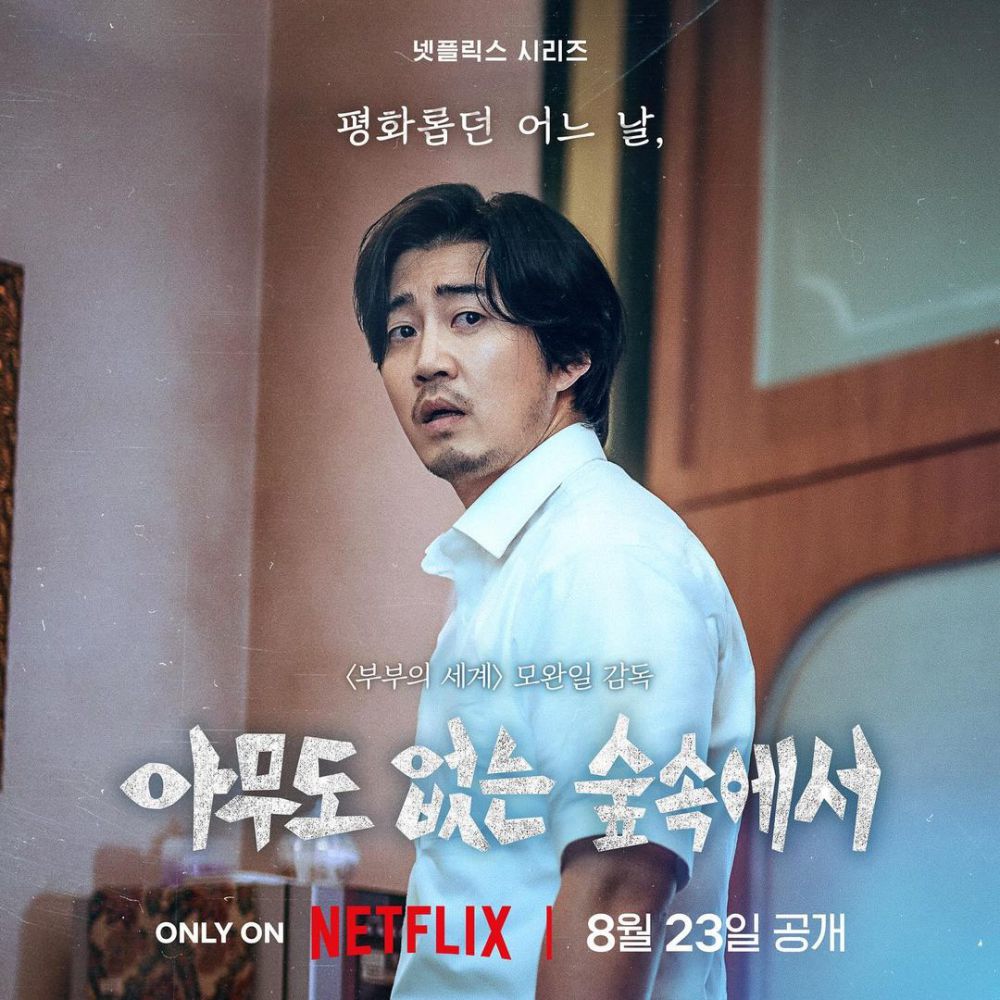
Koo Sang-jun, portrayed by Yoon Kye-sang, was a character I truly admired in many ways. He wasn’t portrayed as perfect, but what stood out to me was his devotion — both as a husband and as a father. No matter how difficult things got, or how often he felt looked down on by his wife, Sang-jun stayed committed to his family and to his dreams.
What resonated with me deeply was his unwavering sense of purpose. He knew what he wanted: to make his motel successful, to provide a better life for his family, and to earn the kind of respect he quietly longed for. Even when things didn’t go the way he hoped, he never gave up or lost focus. His ambition wasn’t reckless; it was grounded in love and a real desire to build something meaningful.
One scene that particularly moved me was when Sang-jun, now residing in a nursing home due to dementia, told his son, “Dad will come get you.” That moment was both heartbreaking and touching, reflecting his enduring love and commitment to his family, even as his memory faded. It underscored the depth of his character and the sacrifices he made.
Sang-jun’s story reminded me that strength is showing up daily, working hard, and holding on to your dreams — even when the world makes you feel small.
Koo Gi-ho
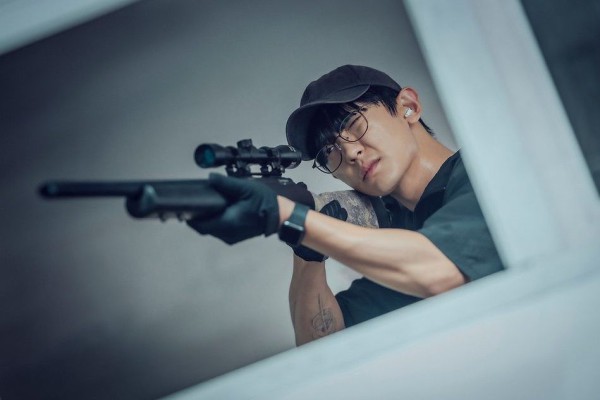
Koo Gi-ho, portrayed by EXO’s Chanyeol, is the son of Koo Sang-jun. Gi-ho’s life was irrevocably altered by a traumatic event at their family-run motel. Witnessing a horrific crime during his youth, he carried the weight of that memory into adulthood, shaping his every action and thought.
Despite the passage of time, he meticulously prepared for the day he would confront Ji Hyang-cheol, the serial killer responsible for his family’s suffering. His dedication wasn’t driven by blind vengeance but by a deep-seated need for closure and justice.
After finally confronting and killing Hyang-cheol, Gi-ho found himself engulfed in despair, contemplating ending his own life. However, he ultimately chose to continue living, perhaps motivated by a desire to honor his parents’ aspirations for him. This decision marked a poignant turning point in his character arc, highlighting his resilience and capacity for hope amidst profound trauma.
Gi-ho’s journey is a testament to the complexities of human emotion and the lengths one will go to protect and honor their loved ones. His character serves as a reminder that even in the face of overwhelming adversity, resilience and love can guide one’s path.
Yoo Seong-ah

Yoo Seong-ah, portrayed by Go Min-si, delivered a raw and remarkable performance that left a lasting impression on me. Her character is a chilling embodiment of a sociopath—manipulative, remorseless, and dangerously self-serving. From the outset, her actions are marked by a disturbing lack of empathy, most notably in the cold-blooded murder of her stepson, Ha Si-hyeon, an act she commits without any apparent remorse or justification.
Her subsequent behaviors—ranging from deceit and manipulation to arson and blackmail—further underscore her detachment from moral and social norms. What’s particularly unsettling is the absence of a clear backstory or trauma to explain her descent into such malevolence; the series offers no definitive insight into the origins of her sociopathy. This ambiguity leaves viewers grappling with the enigma of her character, highlighting the terrifying notion that some individuals may embody evil without a discernible cause or catalyst.
Her character reminded me of the Momo Challenge internet trend—a disturbing and eerie phenomenon that was both frightening and annoying. Seong-ah embodied that same duality: a seemingly delicate exterior masking a deeply troubled and manipulative interior. Her actions throughout the series were a testament to the dangers of unchecked entitlement and delusion.

Seong-ah’s character serves as a stark reminder of how a privileged upbringing, devoid of boundaries and consequences, can lead to a distorted sense of reality. Her journey in the series is a chilling exploration of how innocence can be a facade for something far more sinister.
Yoon Bo-min

Yoon Bo-min is portrayed in her later years by Lee Jung-eun, whose grounded and quietly powerful performance adds depth to the character. Lee Jung-eun also delivered a memorable performance in Miss Night and Day, another K-drama I enjoyed watching last year. The younger version of Bo-min is played by Ha Yoon-kyung, known for her roles in Hospital Playlist and Extraordinary Attorney Woo. Ha brings a sharp and observant energy to the role, effectively capturing Bo-min’s early dedication to justice.
Bo-min’s character serves as the moral compass of The Frog. Returning to the same police substation where she began her career two decades earlier, she brings a wealth of experience and an unwavering commitment to uncovering the truth. Her sharp instincts and dedication to justice make her a formidable presence in the series.
What I found compelling about Bo-min was her ability to see beyond the surface. While others might overlook subtle inconsistencies, she pieces together clues with meticulous care, often noticing what’s missing rather than what’s present. This attention to detail allows her to connect the dots between past and present crimes, revealing the intricate web of secrets that bind the characters together.
Bo-min’s journey is about confronting the lingering shadows of unresolved trauma. Her interactions with other characters, especially Jeon Yeong-ha and Koo Gi-ho, highlight her empathy and determination to bring closure to those haunted by their pasts.
What Does “The Frog” Mean?
The title The Frog draws from a poignant Korean proverb: “A frog can be killed by a carelessly thrown stone.” This saying encapsulates the idea that innocent individuals often suffer the consequences of others’ thoughtless actions. In the series, characters like Jeon Yeong-ha and Koo Sang-jun find their lives upended not by their own misdeeds but by the unforeseen and reckless behaviors of others. They become the metaphorical frogs—victims caught in the crossfire of events beyond their control
Contrastingly, the Korean title, 아무도 없는 숲속에서 (In the Forest Where No One’s Around), underscores themes of isolation and unseen suffering. It reflects the characters’ internal struggles and the notion that tragedies can occur unnoticed, leaving victims to grapple with their pain in solitude.
Final Thoughts
The Frog invites you to question the very nature of justice, morality, and the choices we make when faced with the unimaginable. Its haunting narrative lingers, prompting reflection long after the final episode. So, as you ponder the depths of human complexity portrayed in this series, ask yourself: What would you have done in their place?
 From My Corner of the Couch