

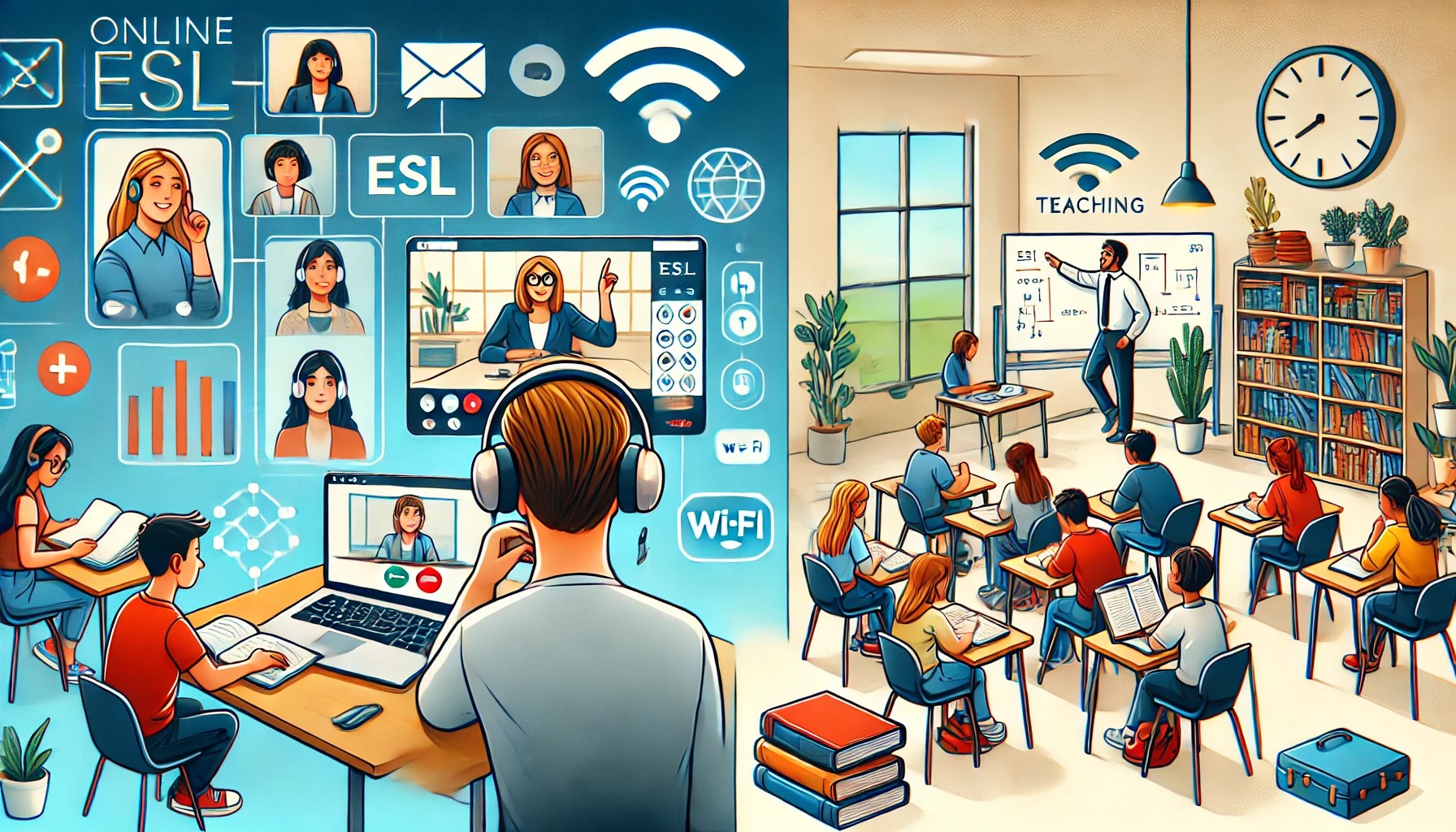
Teaching English has come a long way from crowded classrooms and whiteboards filled with scribbles. These days, you could be explaining verb tenses to a student in Tokyo while sitting in your pajamas at home in the Philippines—yep, that’s me most days.
Online ESL teaching has opened so many doors, especially for people like me who need flexibility and a little quiet corner to earn a living. But as convenient as it is, I’ve also wondered what it would be like to teach in person—real classroom energy, face-to-face conversations, and maybe even coffee breaks with co-teachers. Each setup comes with its own flavor, perks, and pain points.
So, if you’re thinking about diving into ESL teaching or switching things up, this post will walk you through the pros and cons of both online and in-person teaching. Whether you’re a parent looking to earn from home or someone curious about what teaching ESL actually feels like, there’s something here for you.
Let’s break it down and see which option fits your lifestyle, personality, and goals best.
Online ESL Teaching: Pros

There’s a reason more people are choosing to teach English online—it fits into real life. If you’re balancing work, family, or other commitments, this setup can be surprisingly manageable. After a year of teaching part-time, I’ve learned it’s not perfect, but the advantages are solid.
1. Work From Anywhere (Literally)
All you need is a stable internet connection, a headset, and a quiet space. My teaching corner is just a small desk by the window, nothing fancy. Some tutors even teach while traveling—just bring your laptop and find a peaceful spot.
This kind of setup makes it easier for anyone juggling other responsibilities, especially parents or students. You don’t have to dress up or commute. Just log in, teach, and carry on with your day.
2. Flexible Schedules
Most online ESL platforms let you choose your own hours. Want to work mornings while the house is still quiet? You can. Prefer evenings after dinner? Also possible.
I usually open slots around 6 a.m. to 8 a.m. and another chunk in the evening. This setup doesn’t clash with family time or my other job. And if something comes up, just don’t open a slot—it’s that simple.
3. Global Reach, More Variety
One of the things that keeps online teaching interesting is meeting students from different corners of the world. Some are professionals working on their business English, while others just want to chat and get more comfortable speaking. Most of my students—about 98%—are from Japan, but I’ve also had lessons with learners from Korea, China, Vietnam, and even a few Japanese who live in Mexico, Canada, and Germany. Each one brings a different vibe to the session, which keeps the job fresh and never dull.
4. Minimal Expenses
No daily commuting means saving on transport and food. Teaching materials are mostly digital, and many platforms provide the lesson content for you. That means fewer out-of-pocket costs.
I stick to free tools like Canva, Google Docs, and online flashcards. It’s low-cost and still gets the job done.
5. Built-In Teaching Tools
Most platforms come with ready-to-use slides, interactive tools, and chat features. Everything’s in one place. There’s no need to write on a board or print worksheets.
Let’s say a student mispronounces a word—you can type it out, send a link to a pronunciation guide, or replay an audio clip. The tools make it easier to adjust on the spot and keep the lesson flowing.
Online ESL Teaching: Cons
While teaching online has a lot going for it, it’s not without its hiccups. Some days run smoothly, and others—well, let’s just say the internet has other plans. Here are a few downsides that often come with the territory.
1. Unstable Internet = Instant Headache
A sudden lag or disconnection can throw the entire lesson off track. Whether it’s your signal or the student’s, connection problems can be a real test of patience. I’ve had classes where the audio keeps cutting, or the screen freezes just as I’m about to explain something important. It’s tricky to stay on track when you’re saying, “Can you hear me?” more than anything else.
In those moments, quick thinking matters. One trick I’ve learned is to exit the lesson room and jump right back in. Most of the time, that simple refresh solves the issue. If it’s a student’s connection, staying calm and guiding them to do the same—“Let’s both re-enter the room”—helps keep the mood light and the class going.
And if you live somewhere with frequent brownouts or slow internet, having a backup plan—like mobile data, a second device, or even a portable generator—can save your day more than once.
2. Less Personal Connection
There’s just something different about face-to-face interaction. Online, it’s harder to read body language, especially with students who keep their cameras off or stay super quiet. Building rapport takes longer when you’re just two faces on a screen.
I’ve had students who needed a lot of encouragement before opening up. Without in-person cues like smiles or gestures, I had to rely on tone, patience, and extra effort to make them feel comfortable.
3. Screen Fatigue Is Real
Staring at a screen for hours—especially while trying to stay upbeat and engaging—can drain your energy fast. Add in back-to-back classes, and it starts to feel like your eyeballs need a break.
Even just teaching two or three lessons in a row can leave you feeling mentally tired, especially after a long workday. A short break and some stretches between lessons help, but it’s something to watch out for.
4. Home Distractions Can Get in the Way
When you’re teaching from home, the background isn’t always under your control. Doorbells, barking dogs, noisy neighbors—or in my case, a Shopee delivery arriving right in the middle of a pronunciation drill. Last Christmas, I even had carollers outside our window singing Jingle Bells while I was trying to explain subject-verb agreement. You can’t exactly ask them to stop. It’s funny in hindsight, but when you’re in the middle of a lesson, these things can easily throw you off your rhythm.
Unless you have a fully private space (which not everyone does), you’ll need to find ways to manage interruptions without letting them affect your student’s experience.
5. Platform Rules and Limitations
Some companies are super strict with their guidelines—camera must be on, no yawning, stick to the script, never skip a slide. While structure is helpful, it can also feel limiting when you want to get creative or adjust based on your student’s mood or level.
There were times I wanted to pause the lesson to explain something in a fun way, but the timer was ticking and I had to stick to the format. It can be a little rigid at times.
In-Person ESL Teaching: Pros
Teaching in person has its own kind of magic. While online classes are convenient, nothing quite compares to being in the same room as your students. The energy, the interaction—it’s different, in a good way. Here are some upsides that make in-person ESL teaching a solid choice.
1. Real-Time, Face-to-Face Interaction
Being physically present makes it easier to build connections. You can see your students’ expressions clearly, pick up on non-verbal cues, and adjust your approach instantly. If someone looks confused, you don’t have to guess—you can spot it immediately and explain things on the fly.
Imagine teaching a group of beginners. One student furrows their brows while another leans back with crossed arms. These small signs tell you who’s getting it and who needs more support, something that’s easy to miss on a screen.
2. Stronger Student Engagement
Let’s face it—when students are in a classroom, they’re usually more focused. There’s less temptation to scroll through their phone or zone out because they know the teacher is right there.
Group activities, pair work, and games also feel more engaging in person. You can toss a ball around during a vocabulary review or have students physically move around for a grammar race. These kinds of activities are way more effective when done live.
3. Clearer Communication
Teaching pronunciation? You can exaggerate mouth movements and let students mirror you. Giving feedback? You can do it gently with body language, facial expressions, and a supportive tone that’s hard to deliver through a webcam.
It’s also easier for students to ask questions on the spot without worrying about internet delays or technical glitches. That kind of smooth, back-and-forth interaction builds confidence faster.
4. Better Classroom Dynamics and Control
In-person teaching gives you more control over the environment. You can guide group discussions, manage noise levels, and keep things organized without depending on a mute button or typing instructions.
Let’s say the class gets a little too chatty—you can simply walk over, raise your hand, or use a classroom cue to bring their attention back. It’s subtle but effective, and it helps keep the session on track.
5. A More Personal Learning Experience
There’s something about shared laughter over a grammar mistake or small talk before class that builds trust. That kind of rapport grows faster in person, and it often leads to better participation and progress.
Some teachers even become part of the students’ lives—invited to birthdays, asked for advice, or remembered years later. Those human moments are easier to build when you’re not separated by a screen.
In-Person ESL Teaching: Cons
While teaching face-to-face has plenty of upsides, it also comes with its own set of challenges. Some of them might not seem like a big deal at first—but when you’re dealing with them daily, they add up. Here are a few things to consider if you’re thinking about going the in-person route.
1. Commuting Can Be a Daily Struggle
Let’s start with the obvious—getting to work. Depending on where you live, you might need to deal with long commutes, traffic, or unreliable public transport. That’s time and energy lost before your first student even walks in.
If you’re used to working from home, switching to a daily commute might feel like a big adjustment. You also need to factor in transportation costs, especially if you’re traveling far or teaching at multiple locations in a day.
2. Less Schedule Flexibility
In-person classes usually follow a fixed schedule. You have to show up on time, follow a routine, and sometimes even stay longer for meetings or admin tasks. Unlike online teaching, there’s little room to shift things around if something comes up at home.
Say your child has a school activity or you’re not feeling well—you can’t just close your schedule like you would online. You need to call in, find a sub, or adjust your day completely.
3. Higher Out-of-Pocket Costs
Teaching on-site often means spending more. You’ll need appropriate clothes (yes, actual pants 😹😹), daily meals, classroom materials, and maybe even printouts or props. While some schools provide resources, others expect you to bring your own.
It’s not just about the money, either. Lugging around teaching materials or preparing games by hand takes time and effort.
4. Limited Reach and Fewer Opportunities
In-person teaching ties you to one location. If your local area doesn’t have a strong demand for ESL classes—or if opportunities are limited—you might struggle to find enough consistent work.
With online teaching, you can apply to companies worldwide. But in person? You’re stuck with what’s available nearby.
5. Health and Safety Risks
Being in a room with multiple people, especially in enclosed spaces, raises your risk of getting sick. During flu season or in post-pandemic times, this is something many teachers have to think about seriously.
Some teachers wear masks, bring hand sanitizer, or wipe down shared materials between classes. It’s manageable, but definitely an added layer to your routine.
What Works Best for You?
Now that we’ve looked at both sides, the big question is—which one actually fits your lifestyle? The answer isn’t the same for everyone. It really comes down to your goals, personality, and what your day-to-day looks like.
Ask Yourself These Questions:
- Do you need flexibility because of kids, school, or other work?
- Are you someone who thrives with real-time interaction and face-to-face energy?
- Is commuting doable for you, or would it just add stress?
- Do you prefer using tech tools, or are you more comfortable with traditional classroom materials?
- Are you looking for more variety in students, or do you prefer working with a consistent group?
Let’s say you’re a parent who needs to be home most of the day—online teaching might be the best match. You can control your hours, skip the commute, and still earn without leaving the house.
But if you’re someone who feeds off live classroom energy, likes group activities, and enjoys that face-to-face dynamic—in-person teaching might bring you more fulfillment.
You can even test both. Some teachers start online, then move to in-person roles later (or vice versa). Trying both gives you a clearer picture of what truly suits you.
Here’s a quick comparison to help you decide:
| Criteria | Online ESL Teaching | In-Person ESL Teaching |
|---|---|---|
| Flexibility | High | Low to Moderate |
| Commute | None | Required |
| Student Reach | Global | Local |
| Tech Tools | Built-in, easy to access | Limited unless the school provides |
| Classroom Dynamics | Limited by screen | More natural and hands-on |
| Personal Connection | Takes more effort | Happens more organically |
| Cost (commute, meals, materials) | Low | Moderate to High |
No setup is perfect, but knowing your priorities makes it easier to pick one—or blend both into your routine.
Hybrid and Blended Options
If you’re torn between the convenience of online teaching and the face-to-face connection of in-person classes, you don’t always have to choose just one. Some teachers are doing both through hybrid or blended setups, and it’s actually working well for them.
What Does That Look Like?
A hybrid setup could mean teaching online during the week and handling a few in-person classes on weekends. Or, if you’re working for a language school, they might offer a mix—like online lessons for certain students and in-person classes for others, depending on location and availability.
Some even teach private lessons in coffee shops or libraries, then head home to open a few online slots in the evening. It’s all about balancing time, energy, and income.
Why It Works for Some Teachers
Blending both styles gives you the best of both worlds:
- You get the freedom of online teaching during your busiest days.
- You enjoy the human connection and energy of classroom settings without giving up flexibility completely.
- If one stream slows down—say fewer online bookings—you’ve still got a backup.
Let’s say your weekday schedule is packed with other responsibilities. You can save online teaching for quick, efficient sessions in your free hours. Then maybe spend Saturday mornings doing small group lessons in person with kids in your neighborhood. That way, you’re not overloading yourself, but still getting variety and steady income.
Things To Keep in Mind
Of course, managing both takes a bit more planning. You’ll need to track your calendar closely, prep for different teaching environments, and adjust your teaching style depending on the setup.
It’s not for everyone, but if you enjoy variety and have a bit of extra time, trying out a hybrid setup might be a smart move.
Where To Find Opportunities
Whether you’re leaning toward online teaching, in-person classes, or testing the waters in both, knowing where to look makes all the difference. Below are platforms and companies—some well-known, some local gems—that offer either online or face-to-face ESL teaching roles in the Philippines.
Platforms That Offer Online ESL Teaching
These are ideal if you prefer working from home, want to manage your own time, or need a side gig with flexibility:
- Rare Job – A popular choice for many Filipino tutors (including myself). You teach Japanese students from the comfort of your home, and the platform provides ready-made lessons.
- Sankei Online English – Focuses on Japanese learners and offers home-based teaching roles with fixed lesson formats and flexible hours.
- Glats Inc. – Offers home-based teaching jobs and also supports those who want to work in their office setups, giving you some flexibility.
- Chungdahm Philippines – Caters mainly to Korean learners and provides structured online lessons with possible shifts depending on your availability.
- Elite Institute – Offers online programs for students of all ages. Great if you’re looking to work with a range of learners, from kids to adults.
- TeacherOn – A tutoring marketplace where you can post your teaching services and teach students online. You can also set your own rates.
- ECC Philippines – A long-time ESL provider with a strong online setup, focusing on quality lessons and student satisfaction.
Platforms That Offer In-Person ESL Teaching
If you’re someone who prefers real-world interaction and classroom energy, these options can get you started:
- TUTOROO – Connects students with private tutors for in-person lessons in Metro Manila. You choose your rates and schedule, and lessons are often held in public spaces like cafés.
- Local ESL Centers or Language Schools – Cities like Manila, Cebu, and Davao have in-person ESL centers catering to international students or companies needing Business English training. Some hire part-time or per-session.
- Berlitz Philippines – Known globally, Berlitz offers in-person and corporate ESL classes. They sometimes post openings for classroom-based teaching roles in the country.
- Global Academy (ESL.ph) – Offers English proficiency classes with physical locations in the Philippines, and may need classroom instructors for various programs.
You can mix and match based on what works for your schedule, location, and energy levels. Many teachers even shift between these over time depending on life changes—like having kids, relocating, or wanting a break from the screen.
Final Thoughts
So, which setup feels right for you today—and which one might surprise you if you gave it a shot? Sometimes, the best teaching experiences come from stepping slightly outside your comfort zone. Whether you’re just starting or looking to switch things up, there’s always room to grow.
Have you tried both formats—or are you still figuring out where you’ll thrive? Let’s hear your thoughts.
 From My Corner of the Couch